

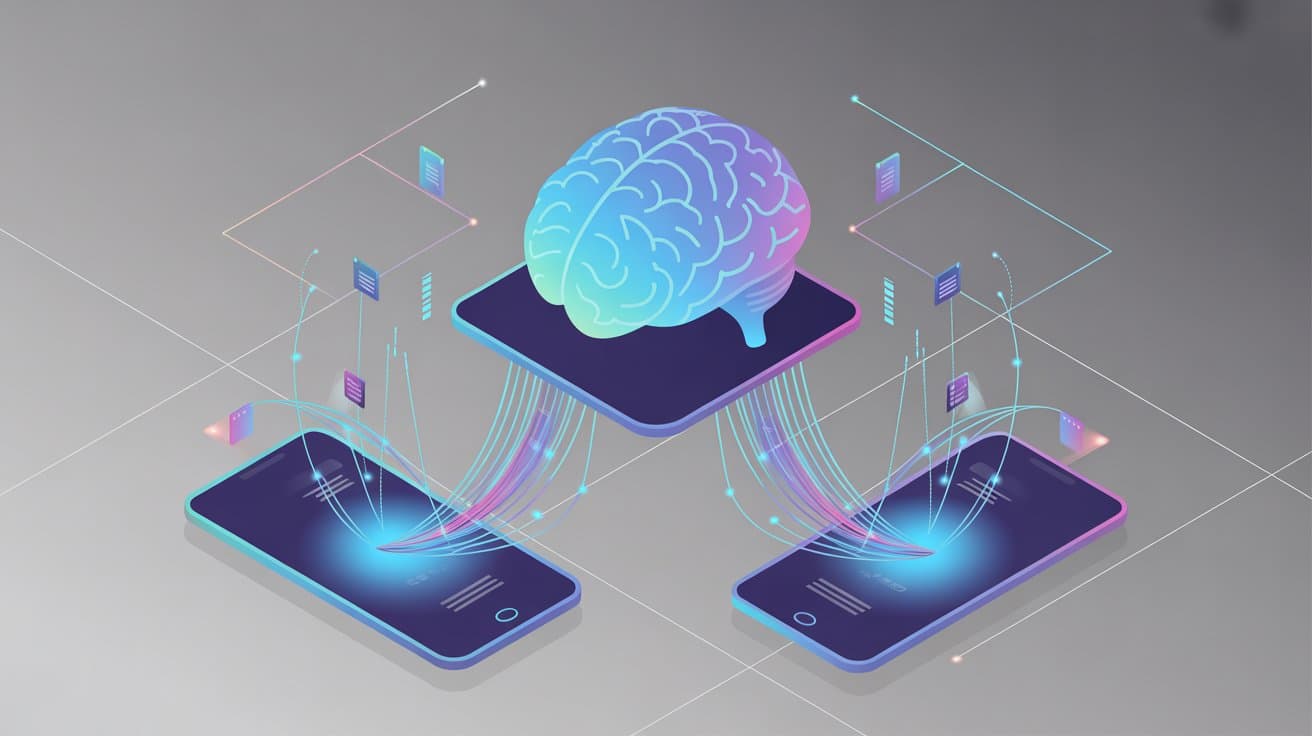
Did you know that nearly 80% of users on dating or professional networking apps suffer from what's known as "swipe fatigue"? That means spending hours endlessly scrolling through profiles, only to end up with very few real, relevant connections. If you're developing or managing this kind of platform, that's a major problem. The solution to re-engaging your users lies in AI for matchmaking apps.
Today, artificial intelligence is no longer just a trendy tech gimmick; it's the core engine that drives highly qualified matches. In this article, we'll explore how integrating AI for matchmaking apps is completely transforming the user experience. We'll break down the key strategies you need to adopt, the crucial mistakes you must avoid, and the best tools on the market to take your app to the next level.
MAIN TOPIC OVERVIEW
But what exactly is AI when applied to matchmaking? In simple terms, it's about using technologies like Machine Learning and Natural Language Processing (NLP) to analyze user behavior, preferences, and data. Instead of relying purely on basic filters (like age, location, or industry), the algorithm actually "learns" from every single interaction.
The importance of this topic today can't be overstated. In 2026, users expect hyper-personalization. Recent data shows that platforms using advanced AI algorithms see their retention rates jump by over 30%. Whether you're running a romantic dating app or a B2B network for professionals, artificial intelligence lets you shift from a "quantity" mindset to a "quality" focus.
KEY STRATEGIES AND STEPS
To effectively implement AI into your app, it's essential to follow precise strategies. Here is how to optimize your platform step by step.
1. Advanced Profile Personalization
The core concept here is to move past the simple sign-up questionnaire. AI can analyze implicit data (like how much time is spent looking at a specific profile, or the type of photos someone likes) to fine-tune its recommendations.
- Practical tips:
- Analyze browsing behavior, not just what users explicitly state in their profiles.
- Use AI to extract keywords from bios (via NLP) to uncover hidden shared interests.
- Example: If a user claims to love "sports" but consistently lingers on profiles mentioning "rock climbing," the AI will dynamically adjust future recommendations to prioritize rock climbers.
2. Automated Moderation and Security
Safety is the number one priority for any connection-based app. AI is absolutely essential for detecting and blocking toxic behavior before it ever reaches your users.
- Practical tips:
- Integrate image analysis filters to automatically block inappropriate content upon upload.
- Set up semantic analysis in chat features to detect harassment or potential scams.
- Example: Many modern platforms use models that spot fake profiles (bots) by analyzing typing speed and repetitive messaging patterns.
3. Chatbots and Onboarding Assistants
How you welcome new users defines their future engagement. A virtual assistant powered by AI can guide users step-by-step to create the perfect profile.
- Practical tips:
- Use an interactive chatbot instead of a long, boring form.
- Offer to automatically pick a user's "best photo" using visual analysis tools.
- Example: A bot that asks, "What are you most passionate about in your career?" and automatically drafts an optimized, catchy headline for their profile.
4. Dynamic Algorithm Optimization
Your algorithm should never be static. It needs to evolve based on user feedback and the overall trends within your app.
- Practical tips:
- Implement feedback loops: ask users why they passed on a specific match.
- Continuously test different algorithmic weights (AI-managed A/B testing).
- Example: Dynamically adjusting the importance of geographic distance if the AI notices that users are willing to travel further on weekends.
COMMON MISTAKES
Integrating AI isn't without its risks. Here are the most frequent traps and how to avoid them.
Mistake 1: Ignoring Algorithmic Bias If your AI is trained on biased data, it will reproduce those biases (for instance, by only showing profiles from a certain demographic or social class).
- ✅ Do: Regularly audit your algorithms to ensure diversity and fairness in your recommendations.
- ❌ Don't: Launch your machine learning model without setting strict ethical guardrails.
Mistake 2: Sacrificing Data Privacy AI needs data to work, but users demand that their privacy be respected. A single data leak can destroy a matchmaking app overnight.
- ✅ Do: Anonymize all data before using it to train your models and strictly adhere to privacy laws (like GDPR or CCPA).
- ❌ Don't: Sell sensitive behavioral data to third parties or store it without end-to-end encryption.
Mistake 3: Overcomplicating the User Interface Trying too hard to show off your AI ("Look at our 4-decimal compatibility score!") can scare off or confuse users.
- ✅ Do: Keep the AI magic running quietly in the background. The experience should remain seamless, simple, and natural.
- ❌ Don't: Clutter the screen with complex statistics instead of just offering up a great match.
RECOMMENDED TOOLS AND RESOURCES
You don't need to code everything from scratch to integrate these technologies. Here are some industry-recognized tools for developing AI in apps:
- Amazon Personalize (Paid)
- Features: Allows developers to easily create individualized recommendations using the same technology that powers Amazon.com. Perfect for suggesting the right profiles.
- TensorFlow / PyTorch (Free / Open Source)
- Features: These libraries are the industry standard for building custom machine learning models. They require advanced technical skills but offer total freedom to build your own proprietary matching algorithm.
- Clarifai (Freemium - Free and paid tiers)
- Features: Excellent for computer vision. Used heavily for visual moderation, it can automatically detect and block inappropriate photos (nudity, weapons) uploaded by users.
- OpenAI API (Paid - Usage-based)
- Features: Perfect for integrating Natural Language Processing (NLP) features. Highly useful for creating smart onboarding chatbots or analyzing the tone of user bios.
CASE STUDY: SUCCESS THROUGH AI
To understand the real-world impact, let's look at a concrete example inspired by market leaders (like Tinder or Bumble).
The App: A major dating platform. The Challenge: Reducing online harassment and increasing positive response rates. The AI Solution: Implementing a feature called "Are You Sure?". The AI analyzes drafted text in real-time. If it detects potentially offensive language, it pops up a warning asking the sender to reconsider their message before hitting send. On the receiver's end, another AI prompts: "Does this message bother you?" to continuously train the detection model. Metrics and Results:
- A 10% reduction in inappropriate messages sent overall.
- A 45% decrease in manual user reports for harassment.
- An increase in overall user trust, leading to a 15% boost in average session length.
This example proves that AI isn't just for "matching"—it's for creating a healthy environment where real connections can thrive.
CONCLUSION
In short, integrating AI for matchmaking apps is no longer optional; it's a strategic necessity. Whether it's refining profile personalization, securing your environment via automated moderation, or optimizing algorithms in real-time, artificial intelligence is redefining how humans connect online. Ultimately, the goal remains the same: less time spent searching, and more time actually engaging.
Ready to transform your app? Start today by auditing your current data. Identify your users' biggest friction points and choose one AI tool (like automated image moderation) for a quick, impactful first test.
FAQ
1. Is integrating AI into matchmaking apps expensive? Costs vary wildly. Using plug-and-play APIs (like OpenAI or Clarifai) is very affordable for startups, usually running on a pay-as-you-go model. Conversely, building a 100% custom machine learning algorithm from the ground up will require the budget for a dedicated team of data scientists.
2. Will AI eventually replace human instinct in dating or networking? No. AI facilitates the "initial screening" by sorting through thousands of profiles to present you with the most relevant ones. However, the chemistry, the conversation, and the final spark will always belong to humans.
3. How does AI handle fake profiles (catfishing)? AI systems use facial recognition to verify that a profile photo matches a real-time selfie. They also analyze behavioral patterns (like login speeds and inconsistent geolocation data) to ban scammers before they can even interact with real users.
4. Do AI algorithms penalize new users? This is a known risk called the "cold start problem." To avoid it, good apps will temporarily boost new profiles to gather initial behavioral data, allowing the AI to categorize them quickly and effectively for future matches.