

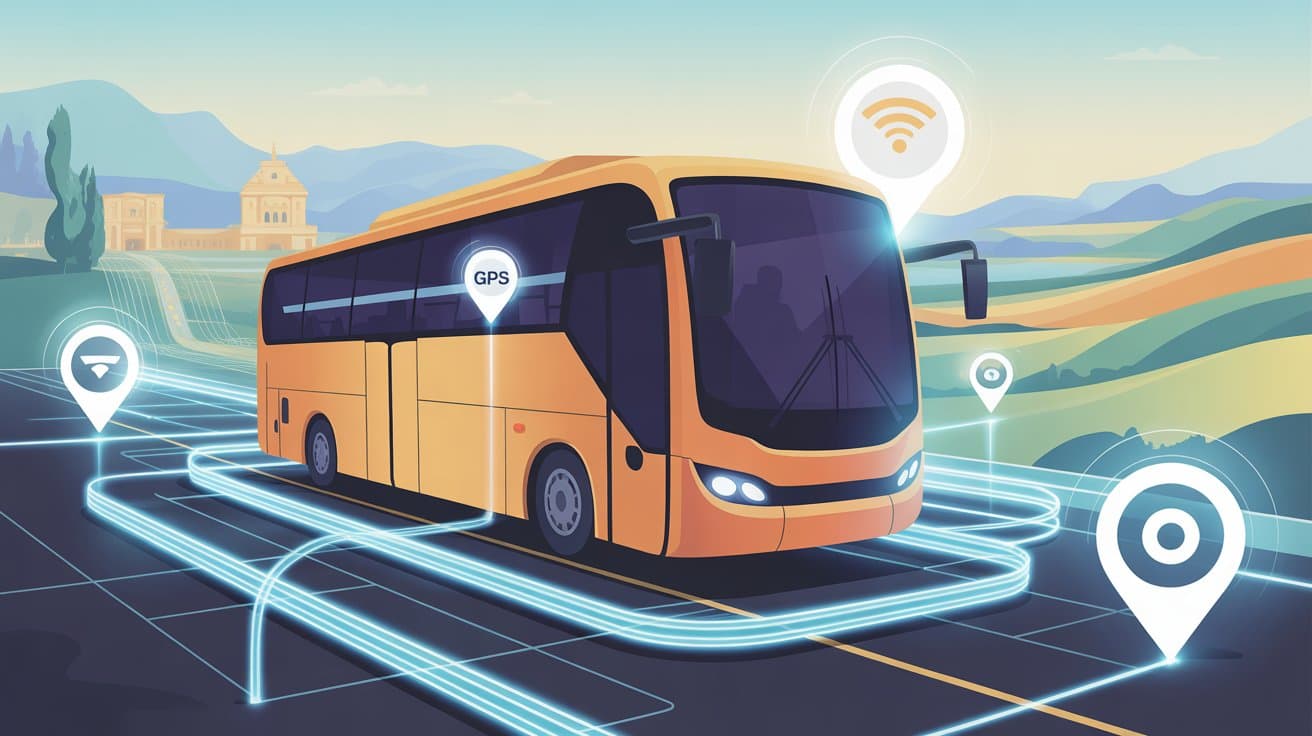
Did you know that by 2030, it is estimated that artificial intelligence will contribute $15.7 trillion to the global economy, with the travel sector standing at the forefront of this revolution? This isn't science fiction; it is our current reality.
If you manage a fleet of coaches, a private hire vehicle agency, or a tour operator business, a crucial question arises: is your tourism transport business ready for the digital shift? Integrating AI (Artificial Intelligence) is no longer a luxury option reserved for tech giants; it is a necessity to remain competitive, cut costs, and, most importantly, dazzle your clients.
In this article, we will explore how the alliance between tourism transport and AI is redefining the rules of the game. From route optimization to traveler experience personalization, discover how to transform this technology into your best commercial asset.
OVERVIEW OF THE MAIN TOPIC: AI IN TRANSPORT
Before diving into strategies, let’s clarify what we are talking about. In the context of tourism transport, AI refers to the use of algorithms, Machine Learning, and data analysis to automate tasks, predict behaviors, and optimize logistics.
Why is this crucial today? The modern traveler is hyper-connected and demanding. They want fluidity, speed, and customization. Traditional manual management methods (Excel spreadsheets, static planning) are no longer sufficient in the face of market volatility (fuel prices, weather unpredictability, peak attendance).
Current Trends:
- Hyper-personalization: Proposing the right vehicle, at the right time, with services adapted to the client profile.
- Sustainability: Using AI to reduce the carbon footprint by optimizing routes (a major issue for green tourism).
- Enhanced Safety: Driver assistance systems and fatigue monitoring.
KEY STRATEGIES FOR INTEGRATING AI
To profit from AI in tourism transport, simply buying software isn't enough. You need a strategy. Here are three fundamental pillars.
1. Intelligent Route and Fleet Optimization
This is the core of the operation. AI doesn't just find the shortest path; it analyzes thousands of variables in real-time (traffic, weather, roadworks, local events).
- Cost Reduction: Fewer unnecessary kilometers mean less fuel and less vehicle wear and tear.
- Punctuality: Predictive algorithms adjust departure times to guarantee tourists arrive on time at their attraction or airport.
- Dynamic Management: If a vehicle breaks down or an urgent request comes in, the system automatically reorganizes the fleet.
Practical Tip: Start by auditing your current routes. Compare your actual trips with those suggested by a consumer navigation app to see the potential for savings.
2. Predictive Maintenance: Anticipate to Avoid Suffering
Nothing ruins a tour group's experience more than a bus breaking down on the side of the highway. Predictive maintenance uses IoT (Internet of Things) sensors on your vehicles to analyze vibrations, engine temperature, and other indicators.
- Zero Unplanned Downtime: AI warns you that a part is going to fail before it actually breaks.
- Smart Scheduling: Repairs are scheduled during off-hours, not during peak season.
- Reinforced Safety: Vehicles in perfect condition guarantee passenger safety.
3. Augmented Customer Experience via Chatbots and Personalization
AI in tourism transport is also what the client sees. Chatbots and virtual assistants available 24/7 are game-changers.
- Instant Answers: "Where is my driver?", "Can I change my pickup time?". AI answers immediately, freeing your human teams for complex tasks.
- Real-Time Translation: For an international clientele, AI breaks down language barriers effortlessly.
- Tailored Offers: By analyzing travel history, AI can suggest relevant extra stops or upgrades.
COMMON MISTAKES TO AVOID
Adopting AI is a journey, and many get lost along the way. Here are frequent traps in the tourism transport sector.
1. Neglecting Data Quality AI is only as smart as the data fed into it. If your client databases are obsolete or your fleet tracking is incomplete, the results will be wrong.
2. Underestimating the Human Factor AI is a tool, not a total replacement. Your drivers and customer service remain the face of your company. The mistake is thinking technology can manage everything without supervision.
3. Trying to Change Everything at Once Implementing a complete AI system overnight is expensive and disruptive. It is better to proceed in stages.
Table: Do's vs Don'ts
| Do's | Don'ts |
|---|---|
| Start small (e.g., route optimization first). | Invest massively without testing the solution. |
| Train your teams to work with these new tools. | Leave employees in the dark, creating fear. |
| Be transparent with clients about data usage. | Use personal data without clear consent. |
RECOMMENDED TOOLS AND RESOURCES
To modernize your tourism transport offer via AI, here is a selection of tools suitable for different business sizes.
Fleet Management Tools
- Samsara (Paid): A leading platform using AI for driver safety (smart cameras) and route optimization. Ideal for medium to large fleets.
- Verizon Connect (Paid): Excellent for advanced GPS tracking and fuel consumption analysis.
Customer Relations & Chatbots Tools
- Zendesk (Paid with trial): Integrates powerful AI to manage client tickets and automate frequent responses.
- Chatfuel (Freemium): Allows you to create chatbots for Facebook Messenger or WhatsApp without knowing how to code. Perfect for managing simple bookings.
Analysis and Prediction Tools
- Google Analytics 4 (Free): Indispensable for understanding where your online bookings come from and how users interact with your site.
- Tableau (Paid): To visualize your data (costs, revenue, trips) and make decisions based on clear charts.
CASE STUDY: AI Serving an Airport Shuttle Company
This section is optional but illustrates the impact concretely.
The Client: "Azur Shuttles" (fictional name), a company operating 20 minibusses in a highly touristic region of Southern France. The Problem: Frequent delays due to summer traffic jams, rising fuel consumption, and client complaints regarding schedule uncertainty.
The Solution: The company integrated an AI-based fleet management solution (like Samsara) and a WhatsApp chatbot for clients.
- Dynamic Routing: Drivers received real-time route updates to avoid congestion.
- Communication: The chatbot automatically sent the driver's location and estimated arrival time to the client.
The Results (after 6 months):
- -18% fuel consumption thanks to smoother trips.
- +25% customer satisfaction (measured by online reviews).
- 40% reduction in calls to the switchboard regarding driver location.
CONCLUSION
The integration of AI in tourism transport is not a passing fad; it is a structural overhaul of operational efficiency. By adopting these technologies, you are not just following a trend; you are building a more robust, profitable, and human-centric business.
AI allows you to free up time for what truly matters: offering an unforgettable experience to your travelers. Do not view AI as a robot taking the wheel, but as the ultimate co-pilot guiding you toward success.
Your Next Step: Don't try to revolutionize everything tomorrow morning. Choose one pain point in your business (fuel too expensive? customer service overwhelmed?) and test a free AI tool or a trial version to solve this specific problem this week.
FAQ: Your Questions About Tourism Transport and AI
1. Is AI in tourism transport expensive to implement? Not necessarily. Many solutions operate on a subscription basis (SaaS). You can start with basic tools for a few dozen dollars a month and increase the investment as your ROI (Return on Investment) grows.
2. Will AI replace drivers? No. In tourism, human contact, historical anecdotes, or a driver's smile are irreplaceable. AI is there to assist the driver (safety, routing), not to eliminate them, at least not in the near future for quality tourism.
3. Is my data safe with these tools? This is a legitimate concern. It is crucial to choose reputable software providers that comply with GDPR (in Europe) and use robust security protocols. Cybersecurity must be part of your AI strategy.
4. How does AI improve ecology in transport? By optimizing routes to avoid unnecessary stops and traffic jams, and by encouraging smoother driving (eco-driving), AI drastically reduces CO2 emissions from transport fleets.